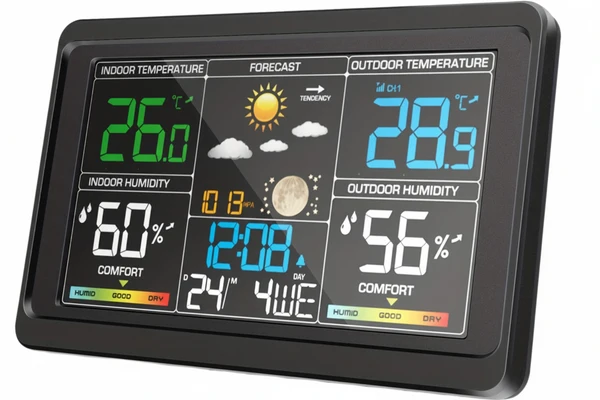
Choosing probe thermometers well is largely a matter of reading the details closely: dimensions, materials and how the parts fit together. Finish affects both look and upkeep, as some surfaces show marks more readily than others. Think about storage between uses too, since shape decides how neatly it can be put away.
Read the full description: names differ between makers, measurements do not.
Decide between a single item and a matching set before comparing options.
Look at the finish: some surfaces show marks or wear more readily than others.
If this kind is not quite right, compare the alternatives: Digital Hygrometers.
Compare two or three close options side by side on the same points.
Frequently asked questions
Why do sizes of probe thermometers vary between makers?
There is no shared size standard for probe thermometers across makers, so the same size name can mean different measurements; check the stated dimensions instead.
What matters when replacing old probe thermometers?
When replacing probe thermometers, start from the measurements of what you had and keep what worked, changing only the material or detail that let you down.
Should I buy one or a set of probe thermometers?
A matching set of probe thermometers keeps everything consistent, while single items let you mix and replace one at a time.
How heavy should probe thermometers be?
The right weight for probe thermometers depends on use: lighter suits frequent handling, while heavier can feel steadier; check the stated weight where it is given.