
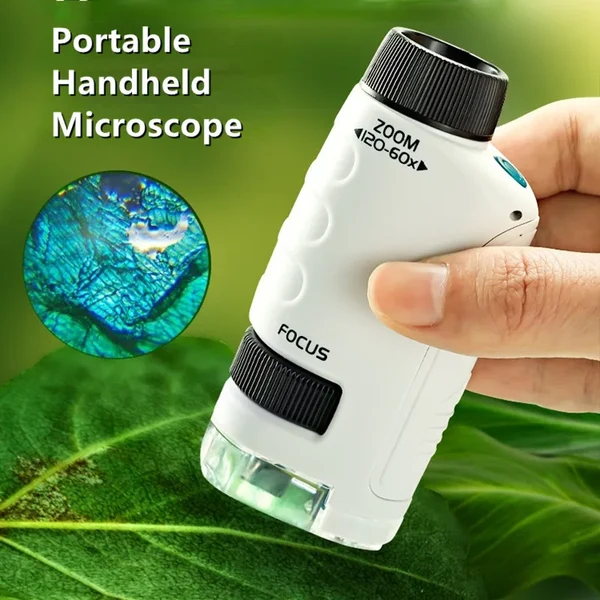
Pocket Microscope Kids Science Kit, 60x to 120x Magnification
From £35.99 incl. VATPick a type
Each type has its own page, filters and sorting, so the list you compare stays short.
How to choose
- Stand geometry and lighting: Boom stands reach across large circuit boards, while integrated ring illumination keeps shadows off fine inspection surfaces.
- Power and bench portability: Battery-powered handheld testers and pocket scales travel between sites, whereas mains-powered bench instruments suit fixed stations.
- Magnification and working distance: Pick stereo microscopes with longer working distance for soldering and assembly, and compound scopes for thin slide specimens.
- Think about how often it will be used: daily use calls for sturdier construction than occasional use.
- Look closely at small details such as edges, seams, joins or fastenings; they show how carefully something is made.
Frequently asked questions
When should I choose a trinocular stereo microscope over a binocular model?
A trinocular head adds a dedicated third port for a digital camera so you can view samples through both eyepieces while recording images or live video.
How should I clean microscope lenses and refractometer prisms?
Blow off loose dust first with an air bulb, then wipe gently in circles using clean lens tissue and an appropriate optical lens cleaner.
Can optical microscopes handle everyday use?
Whether optical microscopes can handle daily use depends on material and construction; for frequent use, look for sturdy builds and finishes that are easy to care for.
Where do I start if I am new to optical microscopes?
If you are new to optical microscopes, start with a versatile, all-round type in a material that is easy to care for, then add more specialised types once you know what you use.
Which material is a good choice for optical microscopes?
There is no single right material for optical microscopes: compare weight, feel and care needs, and choose the one that suits how often and where it will be used.